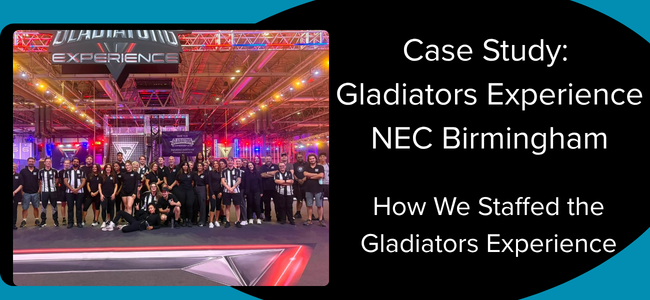
Case Study: Gladiators Experience, NEC Birmingham The Project We were delighted to provide staffing support…
Planning Your First Exhibition at the NEC Birmingham: A Practical Guide for Exhibitors
Your company has decided to exhibit at the NEC Birmingham, the stand space is booked and now somebody needs to organise everything else. From setting objectives and planning what happens on your stand to arranging staff, collecting leads and managing the budget, there are several decisions to make before the exhibition opens. This guide explains the main areas to consider when planning an NEC exhibition, helping you turn that initial booking into a well-organised event with clear business objectives.
Getting Started With Your NEC Exhibition Planning
Agreeing to exhibit is often the easy part. Once the booking confirmation arrives, attention turns to the practicalities of making the event worthwhile.
For some businesses, exhibitions are a regular part of the marketing calendar, with established processes and experienced teams. For others, the responsibility might fall to a marketing manager who has never organised an exhibition before.
Whichever position you are in, the planning process should begin with understanding what the business expects to achieve, rather than immediately concentrating on stand design and promotional materials.
Setting Clear Objectives for Your Exhibition
Exhibitions can serve several purposes, including generating sales leads, launching products, meeting existing customers, finding distributors or increasing brand awareness.
The objective matters because it determines how your stand should operate.
A company attending to generate leads will need opportunities for conversations and a straightforward way to record visitor information. A manufacturer demonstrating new equipment may require a dedicated demonstration area, while a business meeting existing clients might benefit from seating and private meeting space.
Agreeing on the main objective early also helps you measure success afterwards. Rather than simply reporting that the stand was busy, you can assess whether the event delivered the enquiries, meetings or commercial opportunities you expected.
Understanding Who Will Visit the Exhibition
Before planning what happens on your stand, spend some time researching the exhibition’s audience.
Most organisers provide information about previous visitor numbers, industry sectors and the types of businesses attending. This can help you understand whether you are likely to meet purchasing managers, business owners, technical specialists or consumers.
Consider what these visitors will be looking for and how your business can help them. Someone researching a new supplier may want detailed information, whereas a visitor exploring new products may respond better to a demonstration.
Understanding your audience also helps prevent unnecessary spending on activities that attract attention but have little relevance to potential customers.
Planning Your Exhibition Stand and Visitor Activities
Your stand should be designed around what visitors need to do once they arrive.
For product launches, this might involve live demonstrations, samples or opportunities to try the product. Companies promoting services may prefer an open layout that encourages conversations, while larger exhibitors could require separate areas for meetings, demonstrations and hospitality.
Interactive activities, competitions and giveaways can encourage people to stop, although they work best when connected to your business objectives.
You should also consider how visitors will move around the space. A popular demonstration can attract a crowd, but if it blocks the entrance or prevents other visitors from approaching, it may create problems elsewhere on the stand.
For larger stands, deciding where each activity will take place before the event helps avoid congestion and makes it easier to determine staffing requirements.
Choosing the Right Staff for Your NEC Exhibition Stand
Once you know what will happen on your stand, you can work out who needs to be there.
Your own salespeople and technical specialists will often be essential for detailed conversations, product demonstrations and meetings with prospective customers. However, they may not be available to welcome every visitor while carrying out those responsibilities.
Additional exhibition staff can support these activities by greeting visitors, managing demonstrations, distributing samples, capturing leads or directing enquiries to the appropriate person.
The number of staff required depends on the size of your stand, expected visitor numbers and the activities taking place. A small stand focused on conversations will have different requirements from a large interactive stand running several demonstrations simultaneously.
It is also worth planning breaks, busy periods and who will supervise the team throughout the event. A clear briefing before the exhibition ensures everyone understands their responsibilities and the results you are hoping to achieve.
Organising Lead Collection and Follow-Up
If generating new business is one of your objectives, decide how visitor information will be collected before the exhibition begins.
Depending on the event, you may have access to badge-scanning technology or choose to use tablets, digital forms or your existing CRM system.
The important consideration is the quality of information collected. A contact name and email address may be useful, but recording what interested the visitor, their requirements and any agreed next steps gives your sales team a much stronger starting point.
Make sure your data collection process meets UK GDPR requirements and that visitors understand how their information will be used.
Follow-up responsibilities should also be agreed in advance, allowing your team to contact relevant prospects promptly after the exhibition.
Managing Your Exhibition Budget and Practical Arrangements
Stand space is only one part of the overall exhibition cost.
You may also need to budget for stand construction, graphics, furniture, electricity, internet access, promotional materials, transport, accommodation and staffing. Sampling or demonstrations may require additional equipment, storage or waste arrangements.
Check the exhibitor manual supplied by the event organiser for deadlines, access arrangements and any requirements affecting your activities.
It is sensible to allow some contingency within the budget, particularly if this is your first time exhibiting and you are still establishing what equipment and support you will need.
Measuring the Results After Your NEC Exhibition
Once the exhibition finishes, review the results against the objectives agreed at the planning stage.
For lead generation, consider the number of qualified enquiries, meetings arranged and opportunities progressing through your sales pipeline. Product launches may be measured through demonstrations, customer feedback and subsequent enquiries.
Gather feedback from everyone who worked on the stand while the experience is still fresh. Their observations about visitor behaviour, busy periods and frequently asked questions can be particularly useful when planning future events.
Making Your Next NEC Exhibition a Success
Successful exhibition planning starts with understanding what your business wants from attending and then organising the stand, activities and people around that objective.
Before committing to your stand design or staffing arrangements, agree on three things: who you want to attract, what you want visitors to do and what result would make the exhibition worthwhile.
Those answers provide a practical starting point for your planning and help ensure that the investment in exhibiting at the NEC delivers more than a busy few days.

Related Posts