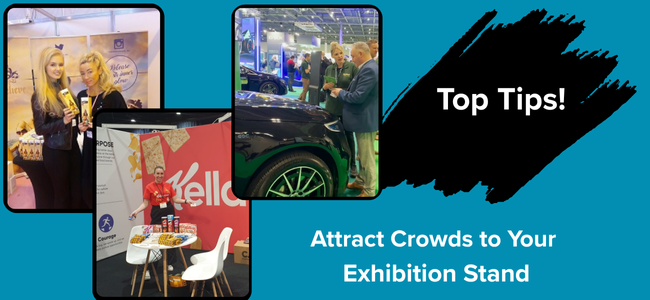
Making your Exhibition Stand Out in a Sea of Stands Exhibitions are busy, bustling environments…
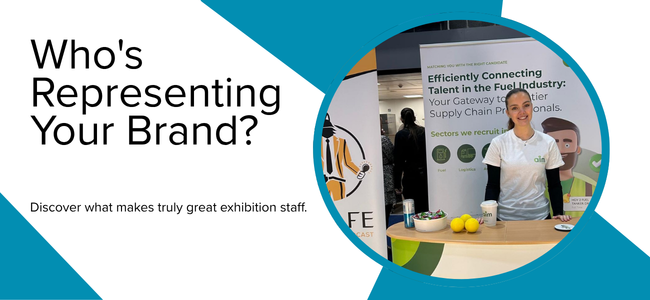
What Makes Great Event Staff?
What Makes Great Event Staff? 10 Qualities Every Exhibitor Should Look For
When businesses plan an exhibition, conversations nearly always follow a familiar pattern: which event to attend, where the stand should be positioned, how the graphics should look, and what products to take. Only later does the conversation turn to the people who will actually be standing on the stand.
That’s worth pausing on, because visitors are far more likely to remember the people they spoke to than the flooring you chose or the height of your graphics. So what actually makes great event staff?
After many years of supplying event staff, exhibition staff, sales staff, and brand ambassadors at exhibitions at the NEC Birmingham, we’ve learned there’s no single answer. The most successful people don’t share one personality type or background; some come from sales, others from hospitality, retail, or promotional work. What they have in common is an ability to make people feel comfortable, and an understanding that an exhibition isn’t just about talking to visitors; it’s about creating an experience that reflects the business they represent.
Why Businesses Focus on the Stand Before the People
It’s easy to see why so much attention goes into stand design. Your stand is the first thing visitors see across the hall; it needs to catch the eye and communicate your brand quickly. But attracting attention and holding attention are two very different things.
Walk around any exhibition at the NEC Birmingham, and you’ll see beautifully designed stands sitting quietly just metres from stands with a constant flow of visitors, even when budgets and products look similar. The explanation that comes up again and again is simple: the stands people enjoy visiting almost always have people on them who know how to make visitors feel welcome.
A visitor’s experience begins before they pick up a brochure with a glance across the aisle, a smile, a greeting that makes approaching feel comfortable rather than awkward. Those moments are hard to recreate through design alone, because they rely on human interaction rather than visual presentation. The stand creates the opportunity; the people determine what happens next.
Exhibitions Have Always Been About People
Visitors aren’t simply looking for products; they could browse websites for that. They attend exhibitions because they want conversations: reassurance before making a decision, the chance to compare suppliers face to face, and ideas they wouldn’t find through a search engine.
Think about the businesses you remember after attending an exhibition yourself. They’re rarely the ones with the tallest display. More often, they’re the ones where someone took the time to understand what you were looking for. You might not remember exactly what was said, but you remember how easy the conversation felt.
This is why exhibition staff matter so much. For the duration of the event, they don’t just represent your business in many ways; they become your business. It’s also why many companies now work with an experienced exhibition staffing agency rather than relying solely on internal teams, not because internal staff lack knowledge, but because exhibiting requires a different set of skills: reading visitor behaviour, starting conversations naturally, and adapting communication style on the fly. Those are skills built through experience, not product knowledge alone.
Why Personality Is Only Part of the Story
One of the biggest misconceptions about exhibition staffing is that success comes down to personality, that the ideal team is made up entirely of outgoing extroverts. In reality, some of the best exhibition staff we’ve worked with are surprisingly quiet. They’re not the loudest voices on the stand; they know how to listen.
Listening is underrated at exhibitions because it’s easy to assume talking creates sales. More often, it’s the ability to ask thoughtful questions and genuinely understand a visitor’s situation that creates the strongest opportunities. Visitors quickly notice the difference between someone waiting for their turn to speak and someone genuinely interested in helping. That distinction turns a sales pitch into an exchange of ideas, exactly what people hope to find at an exhibition.
Patterns We Notice Across Thousands of Visitor Conversations
One unexpected benefit of working at exhibitions year after year is noticing patterns that aren’t obvious when you’re focused on your own stand. Whether it’s a manufacturing exhibition, a food and drink event, or a technology show, visitor behaviour tends to be remarkably consistent.
People gravitate towards confidence, not arrogance. They appreciate enthusiasm, not relentless enthusiasm. Most of all, they respond to authenticity. Visitors can spot the difference between someone who genuinely wants to help and someone following a script. That’s why the most successful exhibition staff rarely sound rehearsed: their conversations feel natural because they adapt to the person in front of them. It sounds simple, yet it’s one of the hardest things to teach.
Confidence Looks Different on an Exhibition Floor
People often imagine confident event staff as those who constantly approach visitors and talk loudly. The reality is usually quieter. Real confidence is knowing when to approach someone and when to give them space, acknowledging a visitor who’s already been stopped three times with a smile rather than forcing another conversation, or recognising that someone reading your graphics may just need a few seconds before engaging.
Experienced exhibition staff are incredibly observant. They’re reading situations: is this person browsing or buying, alone or with colleagues, already decided they want to talk, or still working out if your business is relevant to them? Those judgments happen almost instinctively after enough experience, letting conversations begin naturally rather than awkwardly. Nobody enjoys feeling ambushed the moment they step onto a stand, but equally, nobody wants to feel ignored. Finding that balance is something great exhibition staff does almost effortlessly.
Curiosity Often Matters More Than Product Knowledge
This might sound like an odd thing for an exhibition staffing company to say, but product knowledge isn’t always the quality that makes the biggest difference. Staff obviously need to understand what they’re representing, but that knowledge only becomes useful once someone understands what the visitor actually needs, and that starts with curiosity.
The best conversations often begin with simple questions rather than detailed explanations. Some visitors arrive with a specific question, others are simply curious, and some don’t yet know what they’re looking for; it’s impossible to tell which unless someone asks. One of the nicest compliments clients give is that staff “just seemed to get people.” That’s about listening carefully enough to adapt, rather than repeating the same pitch to everyone.
Reliability Is Probably the Most Underrated Quality
Ask what makes great exhibition staff, and people will mention confidence, communication, and personality. Very few mention reliability first, yet ask any organiser what causes the most stress on the morning of an event, and unreliable staffing will be near the top of the list.
Exhibitions run to fixed schedules with little room for last-minute problems. If team members arrive late or unprepared, the impact is felt instantly. That’s one reason many exhibitors use an experienced staffing agency not just to find people, but for the systems, contingency plans, and coordination behind them. Visitors notice reliability too, even if they’d describe it differently: to them, it simply feels organised. There’s always someone available, conversations flow naturally, and the stand feels calm even when busy, and visitors are, in turn, forming opinions about the business itself. A warm welcome suggests an approachable company; organised conversations suggest professionalism. A team member might spend only five minutes with someone, yet those five minutes can shape whether that person becomes a customer months later.
Should Your Own Team Work the Stand?
There’s rarely a simple answer here. Many businesses assume their own employees should work every exhibition because they know the products and the company, and there’s real truth in that. The difficulty is that exhibiting demands requires more than product knowledge.
Picture a busy morning at a major show: several visitors waiting to speak to someone, another wanting a demonstration, your sales manager finally in conversation with exactly the prospect they came to meet, and then someone new walks onto the stand. Who greets them? Those first moments matter enormously, because visitors left standing awkwardly will often simply move on.
This is where many exhibitors find that a team approach works better than asking everyone to do everything. Experienced exhibition staff can focus on welcoming visitors and keeping the stand approachable, while your own employees concentrate on building relationships with people who’ve already shown genuine interest. It’s not about replacing your team, it’s about letting everyone play to their strengths.
Choosing an Event Staffing Agency Is About More Than Finding People
When businesses first look for an exhibition staffing agency, the instinct is to compare costs or browse photos of previous staff. A better question is: how does the agency decide who will represent your business? That answer reveals far more than headshots ever could.
No two exhibitions are the same. The right people for a food and drink event may not suit an engineering show; a luxury lifestyle brand needs a different style from a technology company exhibiting to procurement professionals. Matching people to brands matters just as much as finding experienced people. It’s worth asking how staff are recruited and briefed, and what contingency plans exist if someone becomes ill on the morning of an event, not to catch an agency out, but to understand the support behind the people on your stand.
Briefing Makes the Difference Between Good and Great
Even the most experienced exhibition staff can’t represent a business properly without the right information. Every exhibition is different, with different objectives, audiences, and atmospheres. Without a proper briefing, even experienced staff are forced to make assumptions, and assumptions rarely lead to the best visitor experience.
A good briefing isn’t just a list of products and prices; it explains why you’re exhibiting, what success looks like, and how you want visitors to feel after spending time on your stand. That last point is often forgotten, yet it may be the most important of all, because people remember experiences far longer than they remember specifications.
What We’ve Learned at Envisage Promotions
Over the years, we’ve supplied event staff, exhibition staff, sales staff, brand ambassadors, and lead generation teams to exhibitions across the UK, including hundreds of events at the NEC Birmingham. Finding the right person is rarely about choosing the loudest personality or the most impressive CV. We look for people who understand how exhibitions work, who treat every visitor with the same attention, and who stay just as professional at four in the afternoon as they were when the doors opened.
Reliability matters just as much. In 2025, our exhibition and event teams achieved a 99.58% attendance rate across more than 18,000 staff shifts, a figure we’re proud of, because we know how much exhibitors depend on having the right people in the right place at the right time. Many clients ask for the same staff to return year after year, which we take as one of the biggest compliments we can receive.
The 10 Qualities We Always Look For
* Professional but approachable
* Confident enough to start conversations naturally
* Curious about the people they’re speaking to
* Able to listen before they sell
* Comfortable adapting to different personalities
* Reliable, punctual, and well prepared
* Positive throughout the entire exhibition, not just the first hour
* Able to work as part of a wider team
* Commercially aware and able to recognise genuine opportunities
* Proud to represent your brand as though it were their own
None of these qualities relates to appearance, age, or previous exhibition experience. They’re all behaviours that shape how visitors feel on your stand, and that’s what people remember long after the exhibition has finished.
Great Conversations Create Great Leads and Experiences
Successful lead generation rarely happens because someone scans a badge or collects a business card. The best leads begin with a good conversation. When visitors feel comfortable, they’re more willing to explain what they’re looking for and whether they’re genuinely in a position to buy information that lets your sales team follow up properly, rather than sending a generic email after the event. This is why choosing the right event staff has such a direct impact on return on investment.
Long after an exhibition closes, people are unlikely to remember exactly what your graphics looked like. They will remember whether someone listened to them and whether the time spent on your stand was worthwhile. Exhibitions have always been about human interaction, technology, and visitor expectations may evolve, but people still buy from businesses they trust and remember organisations that make them feel valued.
Whether you’re preparing for your first exhibition or your fiftieth, taking time to choose the right event staff, sales staff, or exhibition staff could prove to be one of the most valuable investments you make.

Related Posts