Why January Is the Best Time to Secure Exhibition Staff for NEC Events The National…
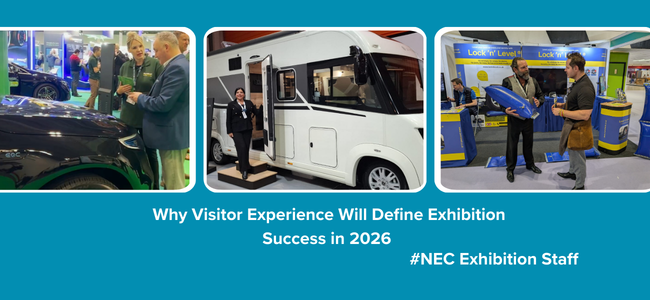
Why Visitor Experience Will Define Exhibition Success in 2026
Why Visitor Experience Will Define Exhibition Success in 2026
Exhibitions have always been about more than floor space, banners and brochures. They are about people. In 2026, that will matter more than ever. As businesses compete harder for attention at busy trade shows and consumer events, visitor experience is becoming one of the clearest ways to stand out.
At major venues such as the NEC Birmingham, visitors are not short of choice. The NEC welcomes around 2.3 million visitors and more than 45,000 exhibiting companies across 500-plus events each year, which gives you a good idea of the scale involved. With that level of competition, simply turning up with a smart stand is no longer enough. Visitors are looking for stands that feel welcoming, well-run and worth their time.
That is why the quality of the experience you create will increasingly define your success. From the first few seconds someone spends glancing at your stand, to the way your team speaks to them, to the follow-up after the event, every part of the visitor journey matters.
In this blog, we look at why human interaction, staff behaviour, first impressions and follow-up expectations will shape exhibition performance in 2026, especially at major UK venues like the NEC.
Why Visitor Experience Matters More at UK Exhibitions in 2026
Exhibitions remain one of the strongest channels for face-to-face business. Industry reporting in early 2026 showed continued growth and stability across the exhibitions sector, with many markets seeing activity increase year on year. At the same time, organisers and exhibitors are putting greater emphasis on experience-led events, because audiences now expect more than a static display.
That shift is especially important at the NEC. Birmingham is centrally located, well connected and attracts visitors from across the UK, making the NEC one of the country’s busiest destinations for trade and consumer shows. The venue hosts everything from retail and manufacturing events to homebuilding, food and drink, security and lifestyle exhibitions.
When visitors are walking through packed halls, meeting dozens of brands and taking in hundreds of visual messages, what they remember is rarely just the stand graphic. They remember how they were made to feel. They remember whether somebody smiled, whether the conversation felt natural, whether they were kept waiting, and whether the stand felt organised or chaotic.
That is why visitor experience is no longer a bonus. It is becoming a core part of exhibition strategy.
Human Interaction Still Drives Exhibition Results
For all the talk of digital tools, live events still succeed because they allow genuine human connection. People buy from people, and exhibitions remain one of the best places to build trust quickly.
A visitor may notice your branding from across the hall, but what makes them stop is often the person standing at the front of the stand. Good exhibition staff make interaction feel easy. They know how to welcome without overwhelming, start a conversation without sounding forced, and adapt their tone depending on the type of visitor in front of them.
This matters at a venue like the NEC, where footfall can be high and visitors often have limited time. They are scanning stands quickly and making snap decisions. A warm greeting, good eye contact and a confident opening line can be the difference between a missed opportunity and a valuable lead.
Human interaction also brings a level of flexibility that no signboard can match. A skilled team member can read body language, judge whether someone wants a quick overview or a more detailed discussion, and respond in real time. That personal judgement is what helps a visitor feel understood rather than processed.
In 2026, businesses that invest in real, professional human engagement will continue to outperform those that rely too heavily on visuals alone.
How Exhibition Staff Behaviour Shapes Brand Perception
Your exhibition staff are not separate from your brand. They are your brand in action. The way they speak, stand, listen and respond all contribute to how your business is perceived.
Visitors notice small things. They notice whether staff are actively engaging or simply standing around. They notice whether team members look approachable or distracted. They notice whether there is energy on the stand or whether the team looks tired by midday.
At a busy venue such as the NEC Birmingham, behaviour matters because there is always another stand nearby. If your team appears disinterested or unprepared, visitors will move on quickly.
Good staff behaviour includes:
- Professional presentation
- Well-presented staff help give a stand a polished, credible feel.
- Consistent engagement
- Visitors should receive the same level of welcome and attention throughout the day, not just in the morning.
- Strong communication
- Staff should be clear, friendly and able to adjust their style depending on whether they are speaking to a buyer, a browser or a returning customer.
- Awareness of stand flow
- Experienced exhibition staff know how to manage queues, spot when someone is waiting, and keep the stand feeling calm and inviting.
For exhibitors, this is where trained staff can make a real difference. Businesses often put huge effort into stand design and product displays, but if the people on the stand do not reflect the same level of care, the overall impression suffers.
First Impressions Are Formed in Seconds
Exhibitions are fast-moving environments. Most visitors decide within seconds whether they want to approach a stand. That first impression comes from a combination of visual appeal, energy and welcome.
At the NEC, where some exhibitions span vast halls and attract enormous crowds, first impressions matter even more. The venue accounts for a major share of visitor traffic within the UK exhibition market, underlining just how important it is for exhibitors to make an impact quickly.
Your first impression is shaped by things such as:
- Stand appearance
- A clean, open and well-organised stand feels easier to enter.
- Staff positioning
- If your team is hidden away in the back, visitors may assume the stand is closed off or uninviting.
- Hospitality touches
- A simple offer of help, refreshments or guidance can make the stand feel more welcoming.
- Energy and atmosphere
Visitors are naturally drawn to spaces that feel active, comfortable and well managed.
This is where an interesting fact about exhibitions comes in. At large venues, there is a huge amount of walking, waiting and talking packed into a single day. That is exactly why small comforts matter. It is not just about products. It is about how people feel while discovering them. Even something as simple as offering tea, coffee or chilled water on the stand can shape how long a visitor stays and how positively they remember the interaction. The NEC offers extensive on-stand hospitality options for exhibitors, which shows just how much venues recognise the value of visitor comfort.
You may not be able to count the number of cups of tea poured during a major NEC show, but it is safe to say that hospitality and human warmth still go a long way in British business culture.
Follow-Up Expectations Are Higher Than Ever
A strong exhibition experience does not end when the hall closes. In 2026, visitors increasingly expect prompt, relevant and professional follow-up.
If somebody has taken the time to stop at your stand, ask questions and share their contact details, they expect the next step to feel organised. That does not mean an instant hard sell. It means timely, thoughtful communication that shows you listened.
Good follow-up might include:
- A thank-you email that refers to the conversation
- Useful information promised on the day
- A next step that feels relevant rather than generic
- A response time that reflects professionalism
- This is where visitor experience and lead quality overlap. If your stand team captures proper notes, qualifies leads well and records what was discussed, follow-up becomes more personal and effective. If they do not, the relationship often loses momentum.
At busy events, many exhibitors focus heavily on what happens during the show but underestimate what happens after it. In reality, follow-up is part of the experience. It shapes the final impression your brand leaves.
What This Means for NEC Exhibitors in 2026
For businesses exhibiting at the NEC in 2026, the message is clear. Success will not be defined by stand size alone. It will be defined by how visitors experience your brand in person.
That means:
- Investing in professional, well-briefed exhibition staff
- Paying attention to how your team behaves on the stand
- Making first impressions feel warm and polished
- Treating follow-up as an extension of the event experience
Birmingham is a city with a strong events and exhibitions heritage, and the NEC remains one of the UK’s most important venues. Exhibiting there gives businesses access to huge footfall and a broad national audience. That opportunity is valuable, but so is the competition. The brands that succeed will be the ones that feel most human, most organised and most memorable.
Top Tips for Improving Visitor Experience at Exhibitions
1. Brief your exhibition staff properly
Make sure your team understands your brand tone, products and audience.
2. Focus on the first 10 seconds
Think about what visitors see and feel the moment they approach your stand.
3. Keep your stand welcoming
Open space, friendly greetings and simple hospitality can all help.
4. Capture useful lead notes
Good follow-up starts with good information collected on the day.
5. Review the experience afterwards
Ask what worked, what visitors responded to and where your team can improve next time.
Better Visitor Experience, Better Exhibition Results
In 2026, exhibition success will be shaped less by who shouts loudest and more by who creates the best visitor experience. At venues like the NEC Birmingham, where thousands of people are moving through the halls, brands that make visitors feel welcome, understood and valued will stand out for all the right reasons.
When human interaction is strong, staff behaviour is professional, first impressions are positive and follow-up is handled well, exhibitions become far more than a marketing exercise. They become the start of real business relationships. Contact us to see how we can help drive your next exhibition to success

Related Posts